

· Steve Callanan · 5 min read
A weight bench is one of the first pieces of equipment most gyms buy, and the first decision is a simple one: flat or adjustable. Get it right and the bench gets used in nearly every session. Get it wrong and you end up with a bench that cannot do the work your program asks for, or one that is more machine than you needed.
This guide compares the two directly: what each does well, how they differ on stability and footprint, who should buy which, and why many studios end up with both.
The short answer
- A flat bench is the simpler, steadier, smaller choice. It suits barbell training in a rack, and rooms where the bench is one of several.
- An adjustable bench does more from one footprint. It suits dumbbell-based training, and rooms where one bench has to do everything.
If you only have room for one weight bench and you train mostly with dumbbells, adjustable is usually the better buy. If you train mostly with a barbell, a flat bench may be all you need.
What a flat bench does well
A flat bench has one job and no moving parts. That makes it:
- Stable. There is no adjustment mechanism to loosen, and the pad sits on a single fixed frame.
- Quick. There is nothing to set between exercises, which suits circuits, supersets and group sessions.
- Versatile in ways people forget. Flat presses, single-arm rows, hip thrusts, step-ups, box squats and seated work all happen on a flat bench.
MasterKraft's Flat Utility Weight Bench Pro is a good example of the type: fully welded, with angled legs for added stability, transport wheels and a 300kg rating.
What a flat bench cannot do is incline. Incline pressing, seated shoulder presses and chest-supported rows all need a backrest that moves, and if those are in your program, a flat bench will not cover them.
What an adjustable bench adds
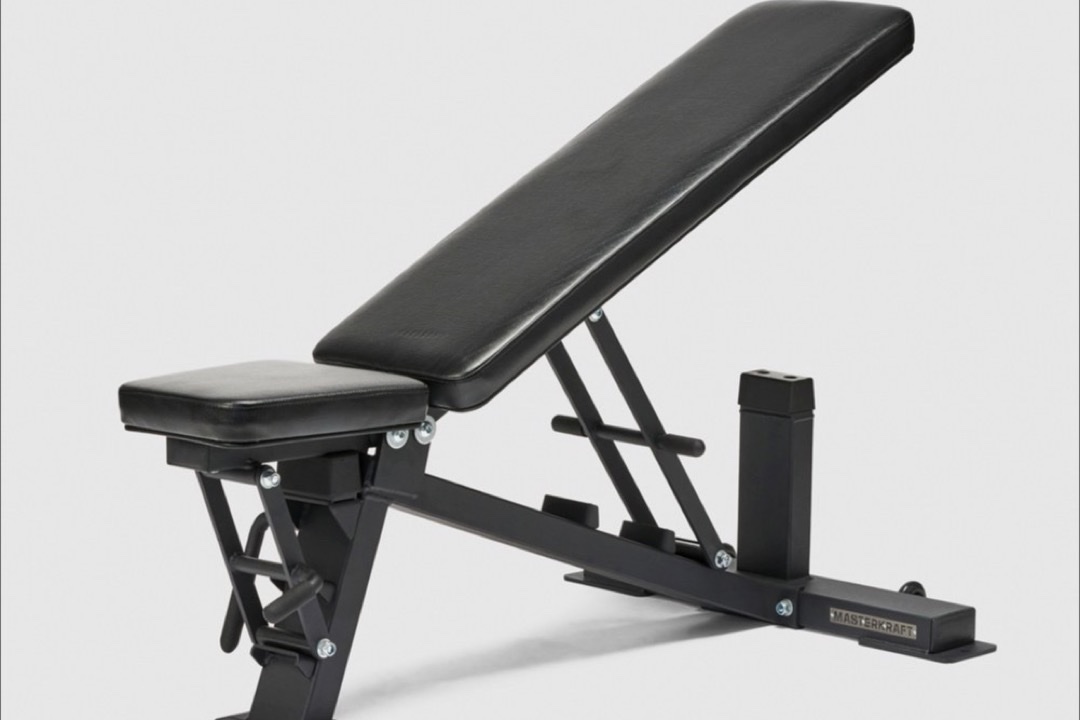
An adjustable bench gives you flat, incline and upright positions from the same footprint. For a dumbbell-based program, that range is the point: the same bench handles flat presses, incline presses, seated shoulder work and supported rows.
The Adjustable Utility Weight Bench Pro has four backrest positions and three seat positions, transport wheels and a 400kg rating.
The trade is complexity. An adjustable bench has a mechanism, takes a moment to change between positions, and is larger and heavier than a flat bench.
In practice, most lifters use only two or three positions regularly: flat, a low or mid incline, and an upright position for seated work. If those three are in your program every week, the adjustable bench is doing work a flat bench simply cannot.
Stability: flat has the edge, but a good adjustable is close
Stability is the thing you feel most on a heavy press. A bench that shifts or rocks makes you hold back.
A flat bench is stable almost by design. A good adjustable bench gets close with a heavier frame and a wider base: the Adjustable Utility Weight Bench Pro weighs 37kg and is 730mm wide, against the flat bench's 25kg and 515mm. Any difference shows most when you sit up from an incline with heavy dumbbells, or set them down hard at the end of a set.
Whichever you choose, put it on a firm, level surface such as rubber gym flooring, so the feet sit flat.
Footprint: what each takes up
The published assembled sizes show the difference:
| Bench | Length | Width | Height |
|---|---|---|---|
| Flat Utility Weight Bench Pro | 1,170mm | 515mm | 452mm |
| Adjustable Utility Weight Bench Pro | 1,370mm | 730mm | 460mm |
The adjustable is 200mm longer and 215mm wider. In a garage or spare room, that can decide where the bench lives. Leave space beyond the bench, too, for dumbbells lowered out wide and for stepping on and off. Both benches have transport wheels, so either can be moved aside when the room has other jobs.
If you plan to bench inside a rack, check the bench fits between the uprights with room to spare. Our squat rack guide covers rack sizes.
Who should buy which
Buy a flat bench if:
- Most of your pressing is with a barbell in a rack.
- You want the steadiest bench for the smallest footprint.
- You already have an adjustable bench and want a second station.
Buy an adjustable bench if:
- Your program is built around dumbbells. Our fixed vs adjustable dumbbells guide covers choosing the set.
- You want incline and seated work without buying more equipment.
- The bench is the only one in the room.
Using both in a studio or PT gym
In a studio, the question is rarely flat or adjustable. It is how many of each.
Adjustable benches earn their place where a coach programs varied pressing and rowing, and where one client might move from incline to seated work in a single session. Flat benches earn theirs in circuits and group sessions, where several people need a bench at once and nobody wants to stop and adjust one.
A common mix is one or two adjustable benches near the dumbbell rack, with flat benches along the rack line and in the group training area. The flat benches also double as step-up and box-squat stations, which saves buying separate boxes for some sessions.
Choosing your weight bench
Browse the full weight benches range to compare models. If you are fitting out a PT studio or a larger room and want the bench count worked out alongside the racks and dumbbells, our PT studio fit-out team can plan it with you.