

· Steve Callanan · 5 min read
A barbell looks like the simplest thing in the gym: a steel bar with a sleeve at each end. But the bar is the part of your setup you touch on every rep, and small differences in its weight, grip and spin decide how it feels on a heavy squat, a fast clean or a long session of presses.
This guide walks through what to look at when you choose a barbell, in plain terms, and where specialty bars earn a place once the main bar is sorted.
Start with what the barbell is for
Before comparing specs, decide what the bar will mostly do:
- Squats, bench press and deadlifts (the powerlifts) want a stiff bar with confident grip.
- Cleans, snatches and jerks (the Olympic lifts) want a bar that spins freely in the sleeves and flexes a little off the floor.
- General strength training sits in between, and most home gyms fall here.
A single multipurpose bar suits most people. If one style of lifting dominates your training, let that decide the details below.
Bar weights and lengths
The standard Olympic barbell weighs 20kg and is about 2.2 metres long. A 15kg bar is a little shorter, with a thinner shaft that suits smaller hands. Both take Olympic plates with 50mm holes.
MasterKraft's Olympic Barbell range covers both: a 20kg bar rated to 2000lb and a 15kg bar rated to 1500lb, each also available in stainless steel. There is also a 7ft chrome multipurpose bar rated to 1000lb, which is built for technique and general training. It is not designed for Olympic lifting or for being dropped, so it suits a rack-based home gym better than a lifting platform.
Those capacity ratings are in pounds, which is common for barbells. The rating describes how much load a bar can carry before it is at risk of taking a permanent bend. You will not load a bar to its rating, but a higher rating usually signals better steel. It matters most if the bar will be racked, dropped onto safeties or shared with heavier lifters.
Knurling: grip without the cheese grater
Knurling is the textured pattern cut into the shaft. It is what keeps the bar in your hands on a heavy deadlift and on your back during a squat.
- Aggressive knurling holds well under heavy loads but can be hard on the hands over high-rep sessions.
- Mild to medium knurling is more comfortable for general training and higher volume.
- A centre knurl helps the bar stay put on your back when you squat, though some lifters find it rubs on cleans.
Knurl marks (smooth rings in the knurling) help you set the same grip width every time. If you can, handle a bar before you buy it. If you cannot, look for a description of the knurl depth rather than a vague "grippy".
Whip: how much the bar flexes
Whip is the bar's flex under load. A bar with more whip bends and springs back as you pull it off the floor, which Olympic lifters use to time the second pull. A stiffer bar stays straight, which powerlifters prefer for squats and bench presses because the load does not bounce.
For a home gym, whip matters less than people expect. Most lifters will never load a bar heavily enough to feel a big difference. A stiffer, durable bar is the safer default.
Sleeves: bearings vs bushings
The sleeves are where the plates go, and they rotate around the shaft. How they rotate changes how the bar feels:
- Bearings spin quickly and smoothly. That suits the Olympic lifts, where the bar turns over fast in your hands.
- Bushings spin more slowly and tend to be very durable. That suits squats, presses and deadlifts, where you do not want the plates spinning.
Neither is better on its own terms. Match the sleeve to the lifting. If a product page does not say which a bar uses, ask before you buy.
Specialty bars worth knowing
Once you have a main bar, a specialty bar can change how you train a lift:
- Safety squat bar. A safety squat bar sits on a padded yoke across your shoulders, so you can squat without reaching back to hold a straight bar. MasterKraft's Olympic Safety Squat Bar is rated to 1500lb, with three foam pads and 350mm loadable sleeves.
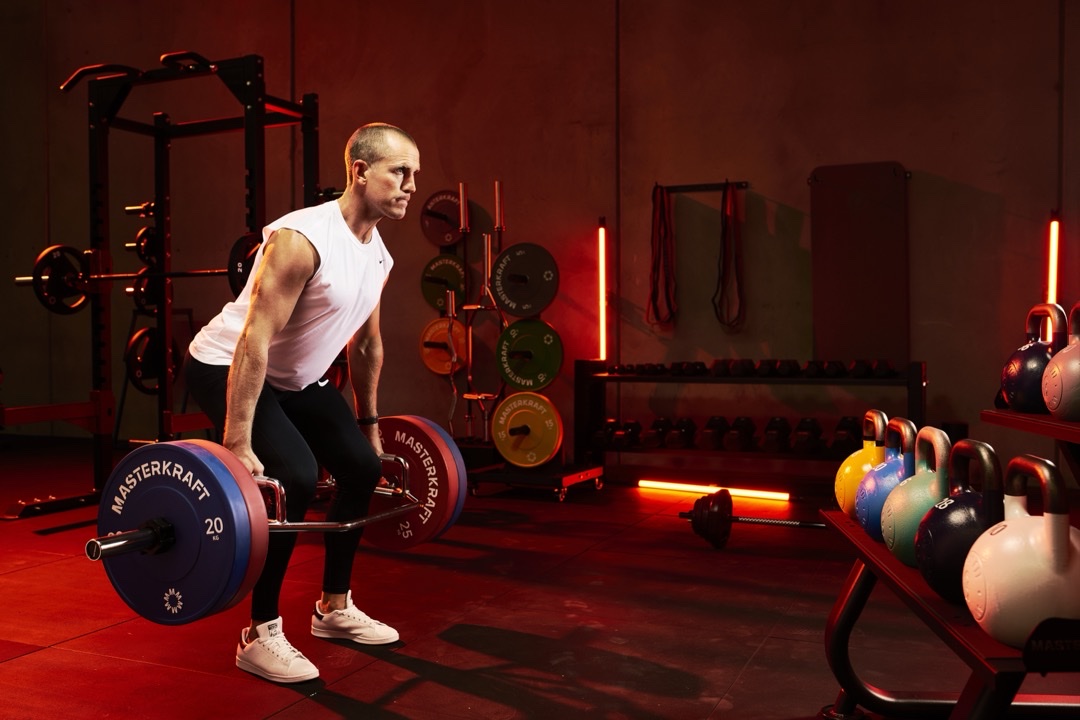
- Hex deadlift bar. You stand inside the frame, so the load sits beside you rather than in front. MasterKraft's hex bar comes with 350mm or 400mm loadable sleeves.
- Swiss bar. Multiple neutral grips (eight handles, four grip positions) make it a good choice for presses and rows.
- EZ curl bar. The angled shape gives a different wrist position for curls and triceps work.
Browse all of these in the barbells range.
Plates and storage
A good bar deserves good plates. Iron plates are compact and last for years. Bumper plates are the choice if you will drop the bar, and our bumper plates guide covers which type suits your floor.
Store the bar off the floor. A bar left across J-hooks or leant in a corner gets knocked, scratched and sometimes bent. Wall storage keeps it out of the way: a vertical barbell storage rack holds bars upright in a small space, and a horizontal wall rack holds them flat at an easy height.
Pick the bar, then the rack around it
The barbell and the rack work as a pair. If you are still choosing a rack, our squat rack guide covers power racks, half racks and wall-mounted options. For a studio or a bigger room, our fit-out team can spec the bars, plates and storage together.