

· Steve Callanan · 7 min read
Once you own a barbell, the plates are the part of your home gym you handle most. You load them, strip them, carry them across the room and stack them away, several times a session. Get the type wrong and you end up with plates that chip, plates that scuff the floor, or a set that cannot take the lifts you actually do.
There are three sensible choices for a home gym: rubber plates, urethane plates and bumper plates. They all fit a standard Olympic bar. The difference is what each one is built to put up with, and how much room it takes on the bar and on the wall.
Start with the bar and the floor
Before you compare plates, answer two questions.
What bar are you loading? Every plate in this guide has a 50.4mm collar opening, which suits Olympic bars with 50mm sleeves. If you have not chosen a bar yet, our guide on how to choose a barbell covers weights, knurling and sleeves. Buy the bar first, then the plates to suit it.
Will the bar ever be dropped? This is the question that decides most of it. If you squat, bench and press inside a rack and lower every rep under control, you do not need bumpers. If you do cleans, snatches, or deadlifts where the bar comes down fast, you need plates made to land, and flooring under them that can take it.
Rubber plates: the sensible default
For most home lifters training in a rack, rubber plates are where to start. Our Olympic Premium Rubber Weight Plates (3 Grip) are recycled rubber over a steel-reinforced core, with stainless steel inserts in the collar opening. They come in seven sizes from 1.25kg to 25kg and are calibrated to within plus or minus 1 percent.
Why they suit a home gym:
- The grips matter more than you think. Three cut-out handles make plates easier to pick up off a rack and carry, which is most of what you do with them at home.
- They are thinner than bumpers. At 22mm thick, you can fit more weight on the sleeve. That only becomes an issue on heavy deadlifts, but it is worth knowing.
- Rubber is kinder to the room. A rubber plate set down on a rubber floor is quieter than bare iron, and less likely to mark a wall or a car door in a shared garage.
A 4 grip version is also listed if you prefer more handle positions.
Urethane plates: same job, tougher skin
Our Olympic Urethane Weight Plates (3 Grip) do the same job as the rubber plates: a steel-reinforced plate with a 50.4mm collar opening, stainless steel inserts and a 22mm profile. The difference is the coating, a rubberised polyurethane that holds its finish and its markings well.
Urethane costs more than rubber at every matching size on our range. Whether that is worth it comes down to how the plates will be treated and how much you care about the look of the room. If the gym doubles as a space people see, or you want plates that still look sharp in five years, urethane earns its price. If the gym is a working garage, rubber does the job for less.
Neither type is made to be dropped from overhead. Both are for controlled lifts.
Bumper plates: for lifts that come down fast
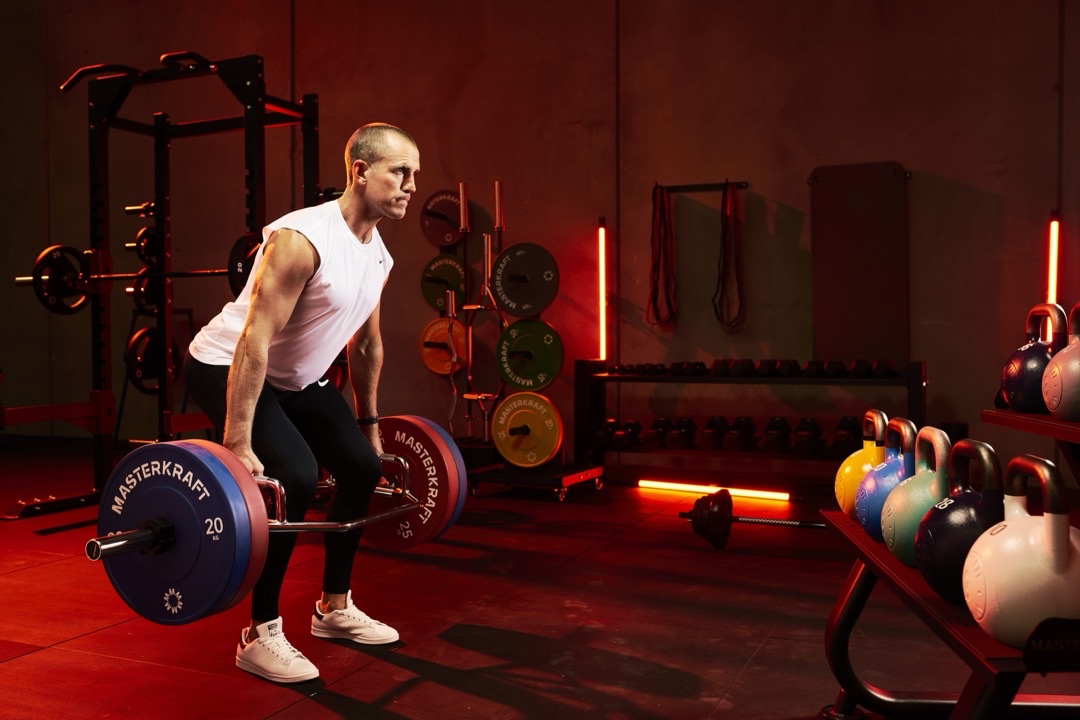
Bumper plates are thicker, solid rubber discs built to be dropped. Ours are made from virgin rubber, which the product pages note has none of the impurities that cause structural flaws in cheaper rubber, with a steel-reinforced centre and stainless steel inserts.
Our coloured and competition bumpers are 450mm across, whatever they weigh. That matters at home for a simple reason: a 10kg bumper puts the bar at the same height off the floor as a 20kg one. You can learn to deadlift and clean from the right height with light weights, which you cannot do with small iron or rubber plates.
Two lines on our range to look at first:
- Coloured Bumper Plates, from 5kg to 25kg, colour coded so you can read the load across the room.
- Competition Bumper Plates, also 5kg to 25kg, the step up for lifters who want a competition-style plate.
The trade-off is bulk. At 35mm thick, bumpers take more room on the sleeve and on the wall, and you will hit the end of the sleeve sooner on very heavy pulls.
The three side by side
| Rubber (3 Grip) | Urethane (3 Grip) | Coloured bumpers | |
|---|---|---|---|
| Sizes on our range | 1.25kg to 25kg | 1.5kg to 25kg | 5kg to 25kg |
| Thickness | 22mm | 22mm | 35mm |
| Made to be dropped | No | No | Yes |
| Grips | 3 cut-outs | 3 cut-outs | None |
| Best for | Rack work on a budget | Rack work, long-term finish | Olympic lifts and fast deadlifts |
Prices for every size are on each product page.
How much weight to buy first
The mistake most people make is buying a big set on day one and then finding they need small plates they never bought. A better approach is to buy what you will use in the next six months, with the small plates included.
A sensible starter for a 20kg bar
- 2 x 20kg for squats and deadlifts
- 2 x 10kg to bridge the gaps
- 2 x 5kg and 2 x 2.5kg for steady jumps
- 2 x 1.25kg for small increases on pressing lifts
That gives you up to 97.5kg on the bar, in steps as small as 2.5kg. Most people training at home will not outgrow it for months. When you do, add another pair of 20s or a pair of 25s.
If you are building a bumper set, swap the 20s and 10s for bumpers and keep the small plates as rubber or change plates. You do not need a 2.5kg bumper.
Do not skip the small plates
Pressing lifts move up slowly. The jump from 40kg to 45kg on an overhead press is a 12.5 percent increase, and that is often too much. Small plates let you add 2.5kg at a time and keep making progress.
Our Change Plates come in 1.25kg and 2.5kg, are made from polyurethane and fit Olympic bars. They are slim, so they sit neatly against a bumper without crowding the sleeve.
Store them off the floor
Plates left on the floor get kicked, trip people up and take over the room. A wall-mounted rack keeps them up and out of the way, which matters in a garage where you still need to fit a car. Our Vertical Bumper Plate Rack 3 Tier (Wall Mounted) is 150mm wide and mounts flat to the wall, so it uses almost no floor space.
The short version
- Training in a rack and lowering everything under control: rubber plates.
- Same, but you want the finish to last and the room to look good: urethane.
- Doing Olympic lifts or fast deadlifts: bumper plates, plus flooring that can take them.
- Whatever you buy, get the small plates and a wall rack at the same time.
If you are planning a full home gym and want help working out the bar, plates, rack and floor together, our home gym fit-out team can put a plan together around your room.