

· Steve Callanan · 5 min read
Most home gyms fail quietly. Nobody gets hurt and nothing breaks. The room just stops getting used, because the bench lives in front of the car, the dumbbells live on the floor, and setting up for a session takes longer than the session.
The fix is rarely more equipment. It is planning the room before buying anything for it. This guide works through that in the order that matters: space, floor, core kit, storage, then the extras.
Start with the room, not the catalogue
Measure the space you actually have, then subtract what the room still has to do. A garage that still needs to fit a car is a very different brief from a spare room that can be given over completely.
Three measurements decide most of what follows:
- Clear floor area. The rectangle you can train in without moving anything. A bench and a set of dumbbells need far less than a rack and barbell, which need space for the bar to pass through on both sides.
- Ceiling height. Overhead pressing and pull-ups need clearance above your reach, not just above your head. Low garage ceilings and roller-door tracks catch a lot of people out.
- Wall space. Walls are where a small gym finds its room. Plates, bands, bars and accessories that hang up are floor space you get back.
If you are not sure what fits, mark the footprint of each piece on the floor with tape before you buy. It costs nothing and it settles most arguments.
Protect the floor first
Concrete garage floors are hard on dropped weights, and dropped weights are hard on concrete. Timber and tiled floors in a spare room are less forgiving still.
Rubber gym flooring under the training area does three jobs at once. It protects the slab or the floorboards. It protects the equipment, because a dumbbell landing on rubber takes far less punishment than one landing on concrete. And it gives you stable footing, which matters more than people expect once the weights get heavier.
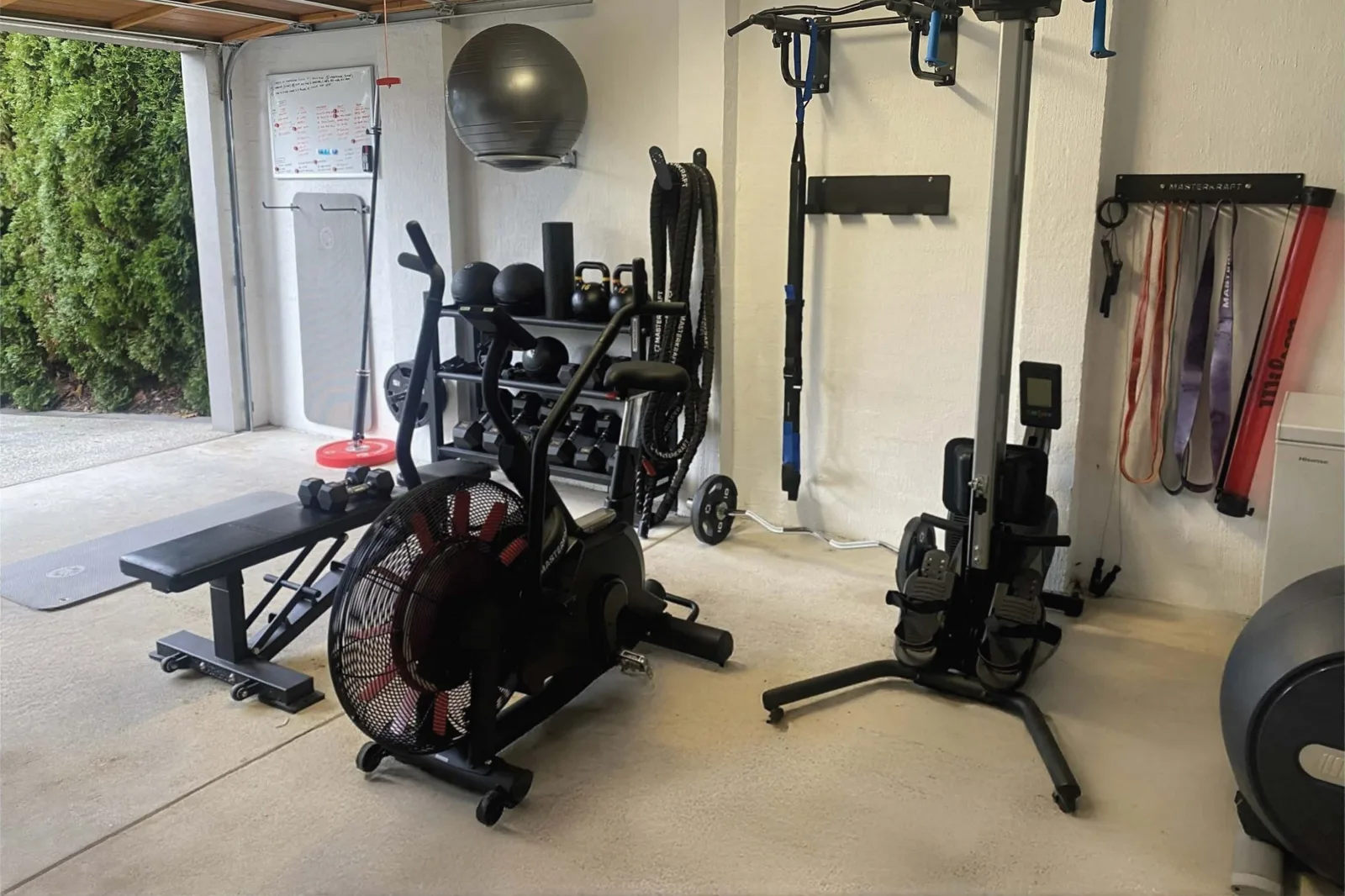
You do not need to cover the whole room. Cover the zones where weights get set down or dropped: around the dumbbell rack, under the bench and anywhere you lift from the floor.
The core kit: what to buy first
A home gym that gets used is usually built around a short list, bought well:
- A set of dumbbells you will not outgrow quickly. Dumbbells cover pressing, rowing, squatting, hinging and carrying, so they do more work per square metre than anything else you can buy. Start with the weights you use most, and plan for the heavier pairs you will want later. Our guide to fixed and adjustable dumbbells covers which type suits which room.
- An adjustable bench. A good adjustable bench turns a dumbbell set into a full program: flat, incline and seated work from one footprint. Look for a published load rating and real seat adjustment. MasterKraft's adjustable utility weight bench is rated to 400kg, with four backrest positions (flat, 30, 45 and 65 degrees) and three seat positions.
- Somewhere to put it all. Covered next, because it is where most home gyms go wrong.
After that, add to the room based on how you train. A rack and barbell suit people chasing heavy strength work. Kettlebells, a rower or a bike suit people training for conditioning. Buy the second wave once the first is earning its place.
Storage is what makes the room usable
Equipment on the floor turns a gym into a storeroom. The single biggest difference between a home gym that gets used and one that does not is whether everything has a place to go.
- Dumbbell racks keep the weights off the floor and in order. A vertical rack stores pairs in a small footprint, which suits tight rooms. A horizontal two-tier rack holds a longer run of pairs at an easy height to grab and return.
- Wall storage handles plates, bars, bands and accessories. In a garage, a wall rail or plate holders can free up more floor than any other change you make.
- Modular storage racks suit mixed kit, such as kettlebells and dumbbells, or medicine balls, on one frame.
Buy storage at the same time as the equipment, and size it for the set you plan to own, not just the set you are buying today. A rack that is full on day one needs a second rack the first time you add a pair.
Buy once, buy commercial grade where it counts
Home equipment does not take the punishment a commercial floor does, but it does have to last. And the cheapest kit is often the kit you end up replacing.
Spend where failure is expensive or unsafe: anything you lie under, sit on or load heavily, such as the bench, rack and bars. Spend where the coating takes the wear, such as dumbbells and plates. Save on accessories that are easy to replace.
MasterKraft builds commercial-grade equipment that is also sold for home gyms: the same benches, dumbbells and storage that go into the studios we fit out, scaled to the room you have.
Get the room planned before you buy
If you would rather have the layout worked out for you, our home gym fit-out service starts with your space and your training, then recommends the kit and the storage to fit both.
And if you want it in before the end of the year, last orders close Saturday 31 October. Prices are on the product pages, so you can plan the room tonight.