

· Steve Callanan · 6 min read
A rowing machine is one of the few pieces of cardio equipment that works the legs, back and arms in every stroke. It is low impact, it suits beginners and athletes alike, and a good one will outlast most of the other kit in the room.
The hard part is choosing one. Rowers look similar on a product page, but the way they create resistance changes how they feel, how loud they are and who they suit. This guide covers the three main types, then the checks that separate a rower you will keep from one you will sell.
How a rowing machine creates resistance
Every rower does the same basic job. You push with the legs, swing the body back and draw the handle to the ribs, and something at the front of the machine resists the pull. What that something is decides most of the character of the machine.
There are three common answers:
- Air: a fan spins as you pull. The harder you pull, the more air it moves and the more it resists.
- Magnetic: magnets near a metal flywheel create the resistance, usually set with a dial or a button on the monitor.
- Water: paddles turn inside a tank of water, and the water resists the stroke.
Air rowers: the training standard
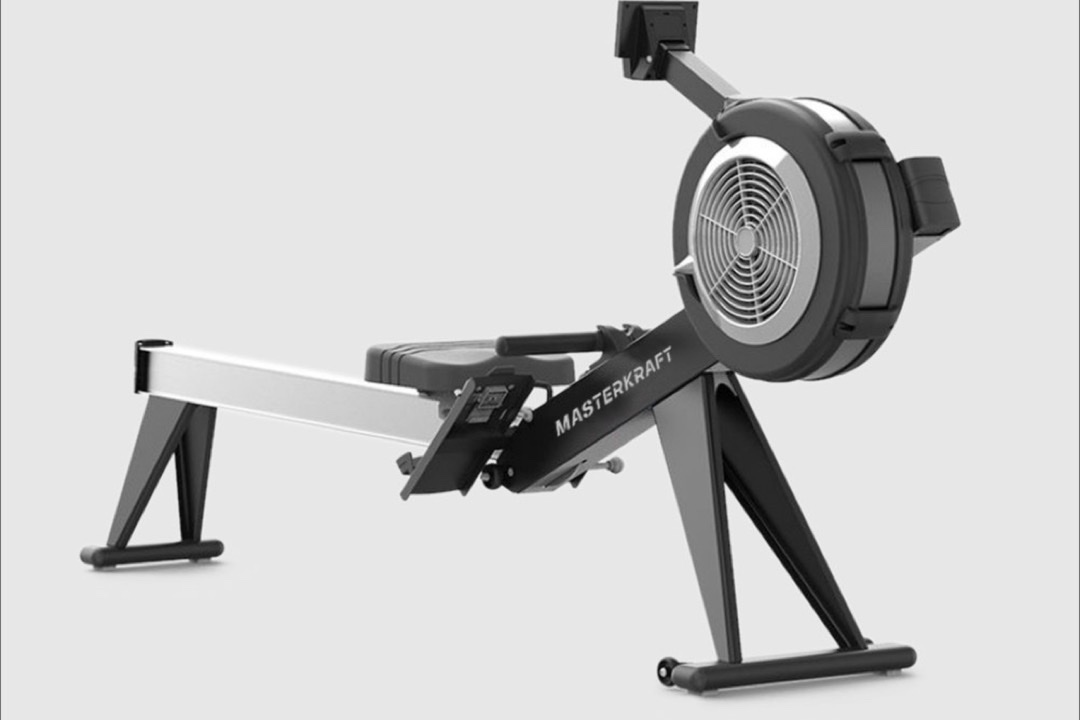
Air resistance is self-regulating. There is no setting to change between a gentle warm-up and an all-out sprint: you simply pull harder and the machine answers. That makes air rowers well suited to interval work, conditioning classes and anyone who wants to measure effort over time.
The trade-offs are noise and air flow. A fan rower makes a steady whoosh that rises with effort, and it pushes air towards the user. In a garage or a studio that is rarely a problem. In an apartment with thin walls, it is worth thinking about.
Air is the resistance type MasterKraft sells. The Air Rower Pro uses a heavy-duty 27 inch fan on a frame built from 30 x 60mm oval steel tubes. The Concept2 RowErg is the air rower that class programming and testing protocols are most often written around. If you are weighing those two up, our Concept2 rower vs Air Rower Pro comparison goes through who each one suits.
Magnetic rowers: quiet and steady
Magnetic rowers are the quietest of the three. With no fan and no water, the main sound is the seat rolling on the rail. That makes them a fair choice for a shared house or a room next to a bedroom.
The resistance is set rather than self-regulating, so you pick a level and train at it. Some people like that predictability. Others find it feels less like a real stroke, especially at higher effort, because the resistance does not build with the pull in the same way an air rower's does.
Water rowers: the feel of the water
Water rowers aim to recreate the feel of rowing on water. The sound of the water moving is pleasant to many people, and the resistance builds through the stroke in a way that feels natural.
They do have practical points to weigh. The tank adds weight and needs occasional care, and the resistance range is set partly by how much water is in the tank. For a dedicated home user who values feel and sound, that is often a fair trade. For a busy studio, most operators prefer air.
What to check on any rowing machine
Whatever the resistance type, a few checks tell you whether a rower is built to last:
- Frame and rail. The rail takes every stroke. Look for heavy steel or aluminium construction and a seat that rolls without wobble.
- Maximum user weight. Check the published rating, and choose one with a margin over the heaviest person who will use it. The Air Rower Pro, for example, is rated to a maximum user weight of 159 kg.
- Seat and foot adjustment. A seat that suits one person can be wrong for the next. The Air Rower Pro's seat has 11 height settings, slides front to back and tilts, so it can be set up for users of different sizes.
- The monitor. At minimum you want time, distance, stroke rate and a measure of output. Connectivity matters if you train with apps or a heart rate strap. The Air Rower Pro has optional Bluetooth and Ant+ connectivity and works with 5kHz chest belts.
- Warranty. Read the split between the frame and the wearing parts. The Air Rower Pro carries 5 years on the frame and 2 years on non-wearable parts.
Space, storage and flooring
Rowers are long. Before you buy, measure the run of floor you can give the machine, then add room to sit down and step off at the back. The Air Rower Pro, as an example, is 2,540 mm long and 510 mm wide when assembled, so plan for more than that once you account for getting on and off.
Height matters if you plan to store it. A rower that lives against a wall frees up the floor between sessions. MasterKraft's wall-mounted Bench & Rower Rack is designed to hold the Air Rower Pro, as well as MasterKraft's flat and adjustable utility benches, so one wall can store both.
Put the rower on a firm, level surface, ideally a rubber mat or gym flooring. It protects the floor and keeps the machine stable through hard strokes. Our guide to setting up a home gym covers flooring and layout in more detail.
Which rowing machine should you buy?
A simple way to decide:
- Choose air if you want a rower for intervals, conditioning or group sessions, and a small amount of fan noise is fine.
- Choose magnetic if quiet is the priority and you are happy training at set resistance levels.
- Choose water if feel and sound matter most and the machine will stay in one place.
For most home gyms, PT studios and commercial floors, air is the practical choice. It is simple, it handles every intensity without a setting change, and it is the type that rowing classes and testing are usually built on.
Browse the full range of rowers to compare specifications. If you are fitting out a studio or a larger room and want help with the cardio line and layout, our fit-out team can plan it with you.