

· Steve Callanan · 6 min read
A PT studio lives or dies on one number: how much coaching revenue each square metre of floor can carry. A big gym can afford a corner that sits empty half the day. A 60 or 100 square metre studio cannot. Every piece of equipment has to earn its footprint, and the layout has to let two or three trainers run different sessions at once without getting in each other's way.
This guide is for personal trainers and small studio owners planning a fit-out, whether it is a first studio or a move to a bigger space. It covers how to zone the floor, which equipment to prioritise, and how to plan the timeline so you open when you mean to.
Start with your sessions, not the catalogue
Before you look at a single rack, write down what actually happens in your studio in a normal week:
- How many trainers are on the floor at peak time?
- Are sessions one-on-one, small group, or both?
- What does a typical session include: strength work, conditioning, mobility, rehab?
- Do any clients need specialist kit, such as athletes who lift from the floor or older clients who need stable seated options?
The answers decide the layout. A studio running three one-on-one sessions at 6am needs three independent stations, each able to cover a full session. A studio running a six-person small group at lunchtime needs open floor and enough duplicate kit that nobody waits.
Zone the floor
Most successful PT studios end up with four zones, even in a small space.
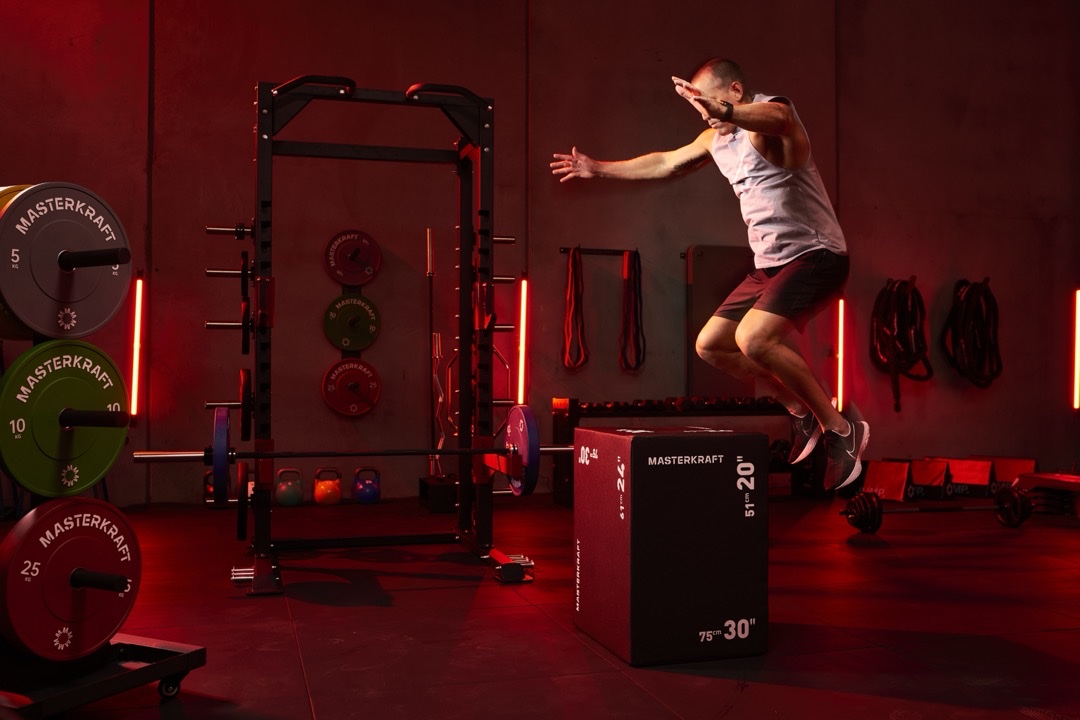
1. Strength station. A rack or half rack with a bench, bar and plates is the backbone. Choose a rack with attachments that add movements without adding floor space: dip bars, a landmine, spotter arms. MasterKraft's rigs and racks range includes half racks, power racks and functional training systems, along with attachments like J-hooks, spotter arms, dip bars and a landmine core trainer.
2. Free weights. Dumbbells and kettlebells do more work per square metre than anything else in a studio. A good dumbbell range with a matched rack lets two trainers run different programs at the same time. Our commercial dumbbells buying guide covers coatings, weight ranges and rack choices in detail.
3. Conditioning. One or two pieces of cardio, plus floor space for sleds, ropes, boxes and medicine balls. Keep this zone away from the strength station so a conditioning circuit does not run through someone's squat.
4. Open floor. Mobility, warm-ups, assessments and bodyweight work all need clear floor. This is the zone that gets squeezed first in planning, and the one trainers miss most once the studio is open.
Choose versatile equipment over specialist machines
In a big gym, a dedicated machine for every muscle group makes sense because members train themselves. In a PT studio, a coach is in the room, which changes the maths. A trainer can coach fifty movements from a rack, a cable, a bench and a dumbbell range. A single-purpose machine coaches one.
That does not mean no machines. A cable column or functional trainer earns its place because it adds dozens of movements. But before buying anything single-purpose, ask how many sessions a week it would actually be used in.
A quick test for every item on the list:
- How many movements does it support? More is better.
- Can two clients use it at once, or can it be shared within a session?
- Does it fold, stack or mount to a wall when not in use?
- Would a client notice if it was not there?
Plan storage as part of the floor
Storage is what keeps a small studio usable. Plates, bars, bands, kettlebells and boxes left on the floor shrink the open zone and slow down every session change.
- Mount what you can to the walls: plate holders, bar storage, band hooks.
- Put dumbbells and kettlebells on racks sized for the full range you plan to own, not just what you buy at opening.
- Keep the most used items closest to the zones that use them.
Flooring is not optional
Every studio floor takes dropped weights, sled pushes and box jumps. Commercial rubber flooring protects the slab, gives clients stable footing, and cuts noise for the neighbours, which matters in shared buildings and retail strips. If you plan to drop weights from overhead or deadlift heavy, plan thicker flooring or lifting platforms in the strength zone.
Budget for the whole fit-out, not just the equipment
The equipment list is only part of the cost. A realistic budget includes:
- Equipment and storage
- Flooring
- Freight and delivery
- Installation and assembly
- Any building work: mirrors, lighting, ventilation, signage
As a starting point, MasterKraft's fit-out enquiry page gives an indicative guide of under $50k for a PT studio or home setup. Your number depends on your floor size and spec, so treat that as a rough band and get a proper quote against your own layout.
Work back from your opening date
The most common fit-out problem is not the equipment. It is timing. A studio with a lease starting in February and equipment arriving in April is paying rent on an empty room.
MasterKraft's typical timeline is 8 to 14 weeks from an approved design to an installed floor. Work backwards from the date you want to open and add time for the design and approval stage at the front. If you want to be coaching in the first quarter of 2027, now is the time to get a design under way.
Before you sign anything, confirm with your supplier:
- When equipment will be manufactured, shipped and installed, with dates.
- Who handles delivery and assembly.
- What the warranty covers, and who you call if something breaks.
- How fast they respond to a service call. MasterKraft puts a 72-hour service SLA in writing, covering response and resolution.
Get a layout before you buy
A floor plan saves more money than any discount. It shows whether the rack fits under the ceiling, whether the dumbbell rack blocks a doorway, and whether two trainers can work side by side.
MasterKraft's PT studio fit-out service is built for this: compact, versatile studios with functional zones covering strength, conditioning and mobility. Send a short brief through the fit-out enquiry form, even a phone photo of a sketch, and the team comes back with a free 3D layout, equipment spec and indicative price, with no deposit or obligation. MasterKraft has fitted out 229 sites across 12 countries, and the same team handles design, supply, freight, installation and warranty.