

· Steve Callanan · 5 min read
For a distributor, the name on the frame matters more than it first appears. Represent an established brand and you inherit its reputation, along with its pricing structure, its other distributors and its decision to change partners. Put your own name on the equipment and you own the brand equity you build, but you also own the work of building it.
Private label commercial gym equipment has become a serious option for distributors, fitout businesses and multi-site operators who want more control over their market. This guide covers when it makes sense, what can and should be customised, the risks most people underestimate, and how to evaluate a manufacturing partner.
What "Private Label" Means in Commercial Fitness
In its simplest form, private label means equipment manufactured by one company and sold under another company's brand. In practice there is a wide spectrum:
- Rebadged. Standard products with your logo applied. Fast and low-commitment, but there is little to differentiate you from anyone else buying the same frame.
- Customised. Standard engineering with your choice of frame colours, upholstery, branding placement, plate and dumbbell finishes, and packaging.
- Bespoke. Equipment modified or engineered for your specification, such as rig configurations designed for a specific floor, custom attachments or a signature product line.
Most successful private label ranges combine all three: rebadged accessories, customised core strength lines, and a handful of bespoke pieces that give the brand something no competitor can match.
When Your Own Brand Makes Sense
Private label is not automatically better than representing a brand. It tends to make sense when:
You already have brand equity in your market. If gym owners already know and trust your business, extending that trust to equipment carrying your name is a short step.
You want to protect your market position long term. A distributor who builds demand for someone else's brand can lose that demand if the relationship ends. Demand built for your own brand stays with you.
You serve multi-site groups or franchise networks. Groups increasingly want their own identity on the gym floor. A distributor who can deliver equipment in a franchise's colours and branding offers something a standard catalogue cannot.
Price positioning matters in your market. Private label lets you set a position, whether premium, value or something in between, without being boxed in by a global brand's pricing.
It makes less sense when you are new to the category, when your market expects a recognised international name, or when you do not have the marketing capability to build a brand.
What You Can Customise
A capable manufacturing partner should be able to work with you on:
- Frame colours and finishes. Powder coat colours matched to your brand or your client's.
- Upholstery. Colour, stitching, embossed or printed logos.
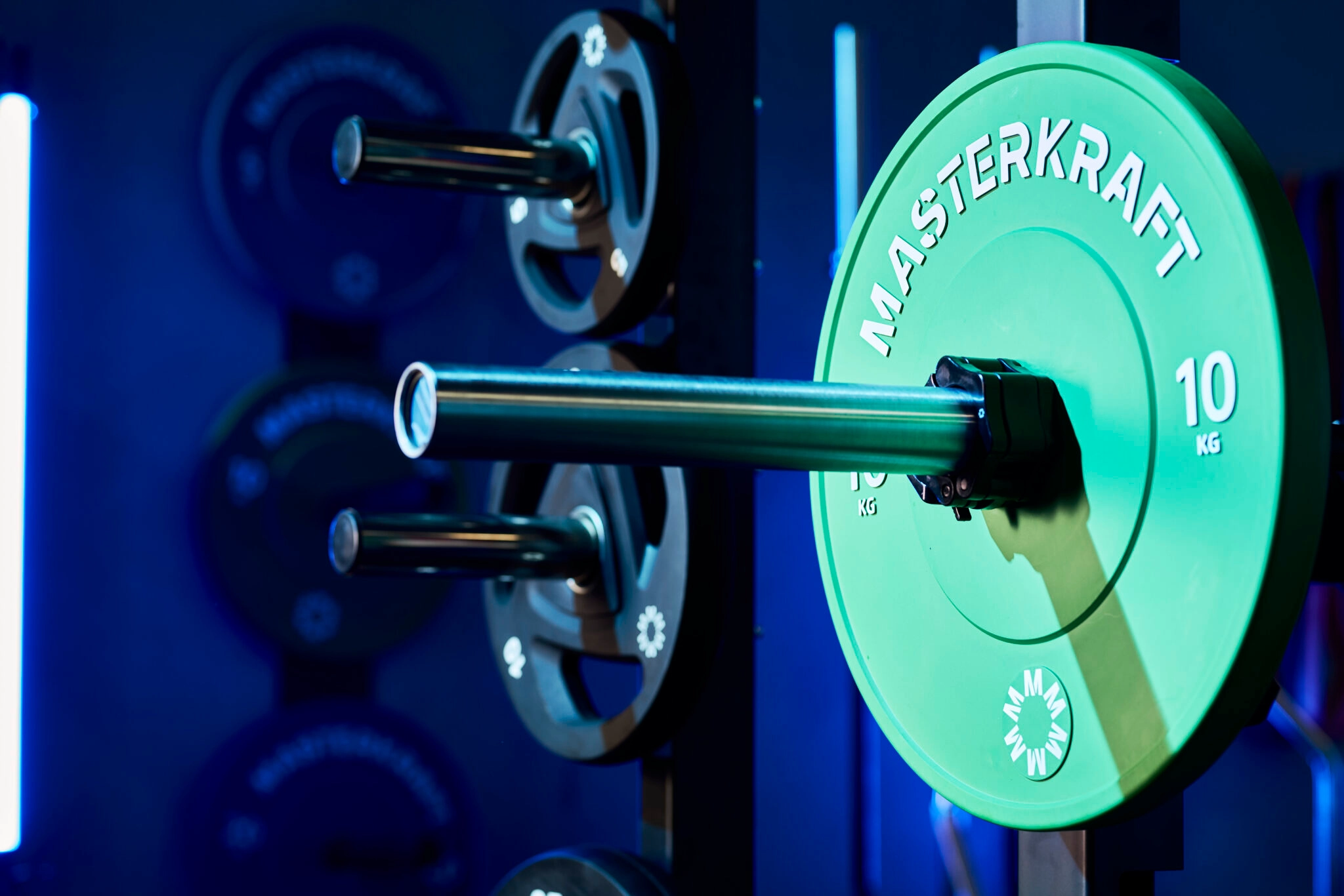
- Branding placement. Shrouds, end caps, weight stacks, plates and dumbbell heads.
- Product configuration. Rig and rack layouts, attachment options and storage solutions designed around real floor plans.
- Packaging and documentation. Branded manuals and packaging, so the unboxing experience reinforces your brand rather than someone else's.
MasterKraft's in-house engineers and designers customise both equipment and branding for partners. Distributors can sell under MasterKraft or under their own brand, and the decision does not have to be all-or-nothing.
The Risks Most Distributors Underestimate
Quality is now your reputation. When the equipment carries your name, every weld, cable and seam reflects on you. Insist on documented quality control before dispatch, not just inspection on arrival.
Warranty does not disappear. Your customers will come to you with warranty claims. Make sure the manufacturer's warranty backing and claims process is defined in writing, including response times. MasterKraft works to a written 72-hour service SLA.
Engineering versus logo-swapping. Some suppliers offer private label but have no engineering capability behind it. If you want anything beyond a sticker, ask who designs the products, who signs off on modifications, and how load testing and durability testing are handled.
Intellectual property. Clarify who owns custom designs, artwork and moulds created for your range. It matters if the relationship ever changes.
Order commitments. Customisation usually carries production commitments. Understand them early and plan your launch range accordingly. It is often wiser to start with a focused core range and expand than to launch a hundred SKUs at once.
How to Evaluate a Private Label Manufacturing Partner
Ask any prospective partner these questions:
- Who designs and engineers the products? In-house capability is a strong signal. Outsourced design suggests the partner is a trader rather than a manufacturer-partner.
- What quality control happens before dispatch? Ask to see the process, not just a statement that it exists.
- How is warranty handled, and what are the response times? Get it in writing.
- How is stock consolidated and shipped? A partner who consolidates across product lines through central warehousing saves you freight cost and complexity.
- Can I see the equipment in commercial use? Ask for examples of sites where the products have been installed and how they have held up.
- Who owns the custom designs and branding assets? Settle this before anything is manufactured.
- How will I order and track orders? An online ordering and payment portal is a significant operational advantage over spreadsheets and email.
Starting Small, Building a Range
The distributors who succeed with private label rarely launch everything at once. A common path is:
- Begin with high-volume, low-complexity products such as plates, dumbbells, benches and storage, branded and customised.
- Add core strength lines once you have proven demand and installation capability.
- Introduce bespoke or signature pieces that become the reason clients choose you.
Throughout, the quality of your first installations will do more for your brand than any marketing spend.
Discuss Your Range With MasterKraft
MasterKraft partners with distributors in new markets, under the MasterKraft name or theirs. If you are considering a private label range, or want to compare it with distributing MasterKraft directly, start a distributor application with details of your market.