

· Steve Callanan · 12 min read
The clock on your 2027 gym fit-out is already ticking, and most operators don't realise it until the best supply windows have closed. If you're running a commercial facility in Australia, the decisions you make in 2026 will determine whether your floor opens on schedule, on budget, and built for the way members actually train.
This guide is written for gym operators who already understand the basics and are ready to plan with precision. A smart gym fit-out isn't just about picking rubber tiles versus EVA foam or finding the lowest cost per square metre. It's about sequencing decisions correctly, aligning flooring and equipment specifications from the start, and treating installation downtime as a real revenue figure rather than a minor inconvenience.
The operators who open on schedule treat planning as a sequence rather than a shopping list. Target date first, zone map second, budget by line item, supplier selection last.
Why 2026 Is the Year to Lock In Your 2027 Fit-Out

Purpose-built, co-branded and bespoke-sized equipment has to be manufactured to order, so its lead time is set by a production schedule rather than by warehouse stock. Ask any supplier for that lead time in writing before you fix an open date, then count backwards from the date rather than forwards from the order. Warehoused stock lines move faster, which is exactly why the two belong on separate lines in your plan.
Operators who delay until Q1 2027 enter the market alongside every other facility planning a new financial year refresh. The more of them there are, the less scheduling flexibility any of them gets, and the more likely you accept what is available rather than what you specified.
Stock listed as available online may or may not carry a confirmed lead time, and may or may not come with installation support or a remedy if goods arrive damaged or incomplete. Both are worth confirming in writing rather than assuming, because they are the contingency buffer you will be relying on if a delivery slips.
Franchise networks and multi-site operators typically commit to large-volume orders months in advance, which means the most flexible production slots are claimed earlier in the calendar. Independent operators who enter late are left with what remains, meaning compromises on product, timeline, or both. The supply dynamics are the same whether you are fitting out one site or twenty; the difference is that a network has procurement discipline built in.
Acting in 2026 changes your position. You have room to negotiate on pricing, lock in co-branding or bespoke sizing without it becoming an afterthought, and choose your installation window rather than accept the first available slot.
Operators planning a complete commercial gym fitout in Australia, or reviewing how franchise networks handle cross-market rollouts including New Zealand, will recognise the same principle: planning earliest gives you the most room to move on spec, cost and timing.
Map Your Training Zones Before You Touch a Price List
Before you open a single price list, you need a zone map. Pricing without one produces a spec that fits no facility in particular.
Zone-specific flooring is now standard practice in commercial fit-outs. Free weights and strength areas require high-density rubber tile or EPDM rubber rated for repeated drop loads; functional training corridors and sled tracks increasingly use synthetic turf designed for lateral movement and sled work. These are not interchangeable surfaces, and treating them as such creates problems that compound over time.
Cardio zones, stretching areas, and group fitness studios each carry distinct load, acoustic, and maintenance profiles. A treadmill bay needs vibration dampening and acoustic isolation. A stretch and recovery zone carries minimal impact load and needs a surface that is easy to maintain. A group fitness room requires a sprung or semi-resilient surface that protects joints across high-repetition class formats. The product selection and installation method differ in each case.
Getting this wrong in either direction costs money. Over-specifying a low-impact zone locks up capital you needed elsewhere. Under-specifying a high-use area accelerates wear and triggers replacement cycles far earlier than a correctly rated product would require. Both outcomes are avoidable with a floor plan review before procurement begins. For a deeper look at where fit-out budgets typically break down, the real costs behind opening a gym in Australia covers the numbers that consistently catch independent operators off guard.
A zone-by-zone floor plan also locks in accurate square metre figures per use type, eliminating the common mistake of ordering uniform coverage across a mixed-use facility.
MasterKraft's fit-out process begins with a facility brief, not a product catalogue. That is how bespoke sizing and co-branding get scoped accurately before any quote is issued.
Cost Per Sqm Is the Wrong Number to Optimise
Divide a flooring budget by floor area and you get a cost per sqm. It is a useful sanity check and a poor specification tool, because it averages across zones with genuinely different requirements. A single figure that looks affordable can hide a strength zone specified too thin and a stretching area specified too thick.
The hidden cost of chasing a lower entry point is replacement frequency. Low-cost imports can undercut mid-market commercial product on price, but thinner gauge rubber compresses and delaminates under commercial traffic sooner than a correctly rated product, and how much sooner depends on your own traffic. At that point you are paying installation labour again, absorbing member disruption again, and carrying the reputational risk of degraded flooring in the interim. Lifecycle cost analysis is the standard way to compare the options, because it counts replacement frequency, installation labour per cycle and the liability exposure of degraded flooring rather than purchase price alone. Run that comparison on your own traffic and replacement assumptions before deciding, rather than taking either the cheap or the mid-market option on faith.
The practical fix is straightforward: budget flooring, equipment, and installation as separate line items. When they sit in a single pool, cost pressure on equipment silently compresses the flooring spec, or vice versa, and neither category is evaluated honestly.
Transparent pricing helps here. MasterKraft publishes prices on its flooring product pages, by tile and by turf roll, so operators can build a comparison without submitting an enquiry just to see a number.
Installation Downtime Is a Revenue Line Item, Not Just a Scheduling Inconvenience
Product cost is only part of the fit-out financial equation. Every day your facility is closed for installation is a day of membership revenue you cannot recover.
That is not a scheduling inconvenience; it is a direct financial variable. A busy independent gym loses real income for every operational day lost, which means installation speed and sequencing belong in your budget modelling alongside product cost.
DIY interlocking foam systems are often positioned as the way to avoid this. No installation crew, no wait, lay it yourself over a weekend. The risk is that surface inconsistency and joint separation in high-use zones only show up under repeated load, which is after the time saving has already been banked.
The better approach is staged, zone-by-zone installation. Close the free weights area for two days while the rest of the floor stays operational, then progress to the next zone. Full-facility closure becomes unnecessary, and members experience a rolling refresh rather than a shutdown. This only works, however, if your supplier and installation partner can sequence delivery and labour to match, rather than arriving with everything at once and expecting you to manage the coordination. Understanding how scope, spec, supply and support must run in sequence is exactly why phased delivery needs to be agreed before contracts are signed.
MasterKraft publishes a 72-hour service SLA, in writing, covering response and resolution.
Finally, think about where the installation sits against your own sign-up and attendance curve. If your January intake arrives before its visit frequency peaks, there is a window where a staged install costs less disruption than it would later. Pull your own numbers from the last two years rather than assuming the pattern.
Scoping Equipment and Flooring Together Avoids Costly Mismatches
Sequencing your installation correctly solves the downtime problem, but sequencing only works if your equipment and flooring were scoped as a single system from the start.
Splitting those two categories across separate suppliers is one of the most common and costly mistakes in commercial fit-outs. Anchor points get drilled before flooring is confirmed. Rig footprints land across zone boundaries. Storage systems end up positioned directly over flooring seams, creating joint stress that causes long-term failure under repeated load. Each of these is avoidable, but only if both procurement decisions happen in the same room at the same time.
The reason this matters technically: strength rigs, weightlifting platforms, functional rigs and racks, and cable systems each impose specific load concentrations and footprint dimensions that directly determine the flooring specification required beneath them. A rig base sitting on flooring rated for a cardio zone is not a minor mismatch. It is a structural and safety issue, and it arises precisely because equipment and flooring were treated as independent decisions with no single supplier accountable for closing the gap. Understanding how to match equipment spec to your actual facility usage load is where that unified scoping process begins.
MasterKraft supplies strength, weightlifting, rigs and racks, cardio, functional implements, storage, flooring and lighting as a complete facility scope, across 229 sites in 12 countries.
For independent operators specifically, a unified scope also means a single point of accountability. If something goes wrong during installation, there is no gap between suppliers for the problem to disappear into.
What Multi-Site Operators Do That Independents Should Copy
Networks secure first access to production capacity by committing well ahead of a site opening, a discipline any single-site operator can replicate. The result is network-wide consistency: every site carries the same visual identity, the same flooring specification, and the same equipment standard. Maintenance procurement simplifies because every location runs the same parts. Members who visit multiple sites experience no friction between them.
Independents can apply identical planning discipline to a single site. A confirmed brief, a locked floor plan, a budget with line items per category, and a supplier relationship in place before the Christmas slowdown, when manufacturers are setting production schedules for the following year, delivers the same procurement advantages. The scale is smaller; the process is the same.
MasterKraft offers co-branding and bespoke sizing to independent operators as well as to franchise networks. Confirm the specification options and any cost attached to them for your own order size at brief stage. Facility identity is a genuine differentiator in a competitive local market, a point explored further in this analysis of long-term ROI drivers for commercial gym fit-outs.
The competitive return on planned execution is not only visual. Members notice equipment quality, flooring condition, and facility cohesion, and those perceptions shape renewal decisions. A well-planned independent fit-out competes on exactly the same terms as a network site. The discipline is the differentiator.

Your Pre-2027 Fit-Out Planning Checklist
The planning discipline described above only delivers results if it is applied in the right sequence. Work through these five steps before you approach any supplier.
- Lock in your target date first. Confirm your open or relaunch date, then count backwards. A mid-2027 opening requires equipment and flooring orders confirmed well before year-end 2026 to absorb manufacturing lead times and allow installation scheduling without compression.
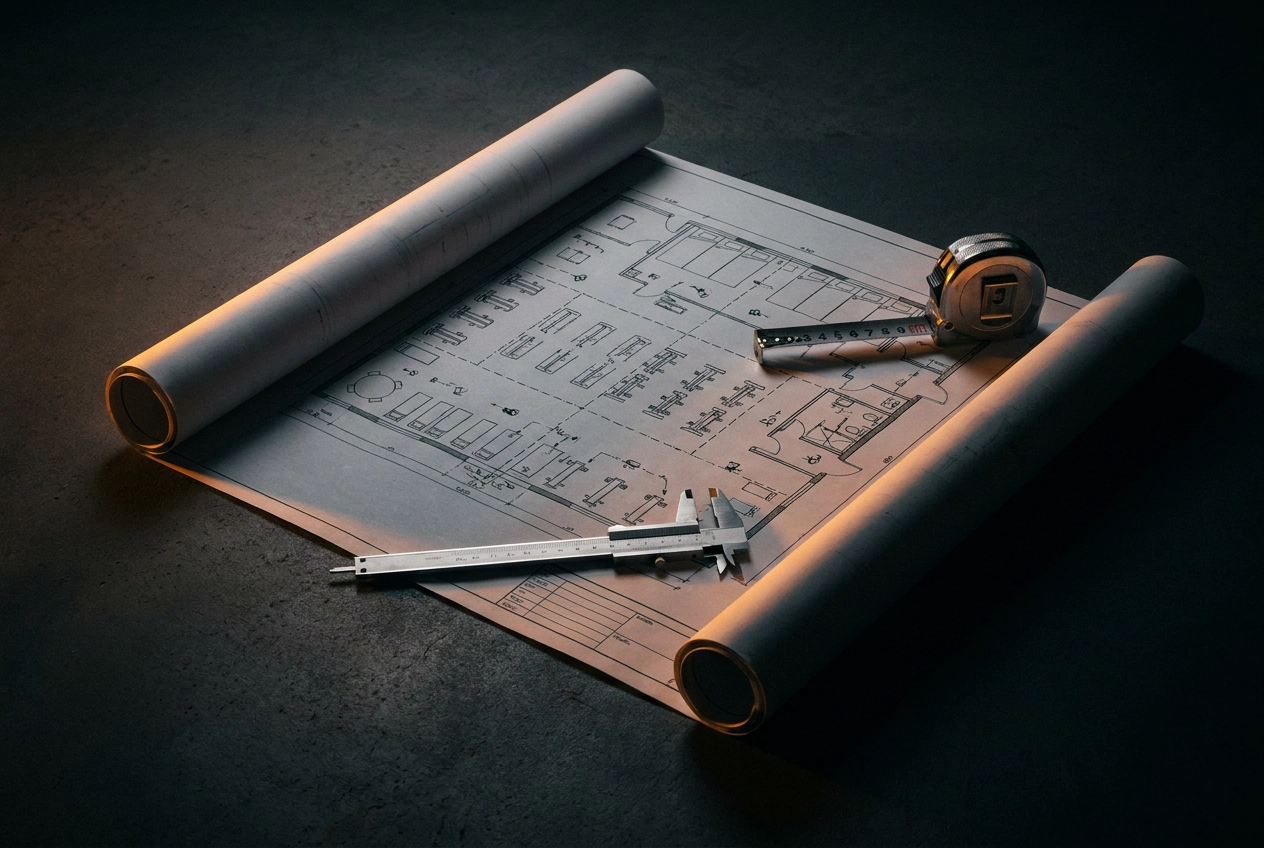
- Complete a zone-by-zone floor plan before requesting pricing. Measure sqm per use type: strength and free weights, functional training, cardio, group fitness, stretching. Suppliers cannot give you an accurate quote from a total floor area figure. Zone-specific measurements prevent both over-ordering in low-impact areas and under-specifying in high-use ones.
- Build a line-item budget, not a lump sum. Separate flooring, equipment, and installation into distinct cost categories. Add a contingency line for scope changes and shipping variances, a standard allowance used in commercial fit-outs. When cost pressure arrives, a line-item structure lets you adjust one category without silently compromising another.
- Vet suppliers on supply, installation, SLA, and track record together. A supplier who can deliver product but not installation creates a coordination gap on your floor. Require transparent pricing, a written post-installation SLA, and verifiable experience on commercial sites rather than consumer-grade specifications.
- Declare co-branding and bespoke sizing at the brief stage. These requirements affect manufacturing lead times. Raising them after a quote is issued extends your timeline and may affect pricing. Locking them in at the outset keeps your year-end 2026 order window intact.
Start Your 2027 Fit-Out Brief Now
With the checklist locked, one task remains: act on it before the window narrows.
Acting early means you choose your installation window rather than accept what is left. As 2027 approaches, larger operators with advance purchase commitments will have secured the most flexible production and installation slots. The planning decisions you make in the second half of 2026 are the most consequential lever you have.
The real risk here is not overspending. It is under-planning. Operators who confirm their brief, zone map, and supplier this year open on time with the right product to the right spec. Those who wait typically face a forced choice: accept a reduced spec, push the open date, or pay a premium to jump a queue that is already moving.
MasterKraft works with both independent operators and franchise networks as a complete fit-out partner, covering equipment, flooring, rigs, storage and lighting under a single scope. Most of the catalogue carries prices on the product pages, so you can build a budget comparison without a contact form standing between you and a number. Larger machines are quoted on enquiry.
The next step is straightforward. Submit a facility brief or get in touch to begin scoping your 2027 fit-out with MasterKraft before peak supplier capacity closes off your best options.
Conclusion
Supply timing, total cost, integrated scoping and installation downtime all point the same way: the decisions that determine a 2027 open are made in 2026.
Your 2027 fit-out brief does not need to be perfect to start. It needs to exist.
Submit your facility brief today and MasterKraft can scope a fit-out around your open date, your zones and your budget.